
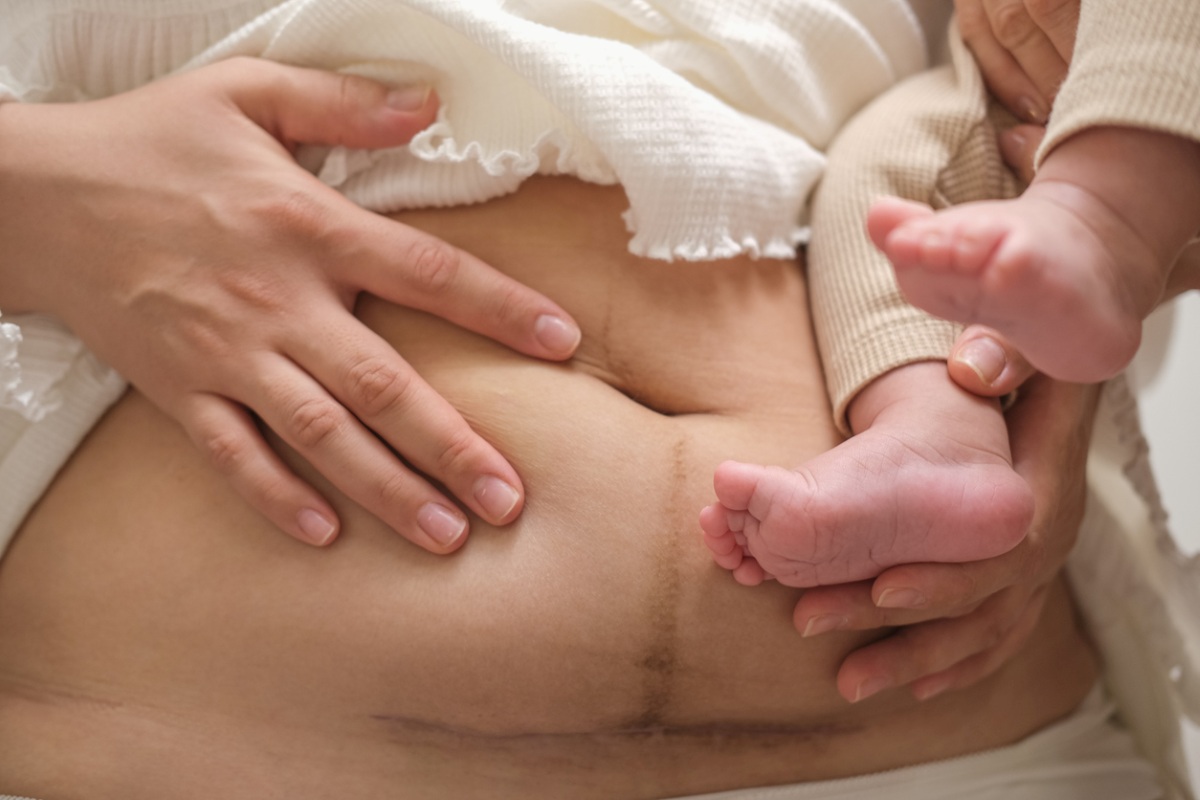
A cesarean section, often called a C-section, is a surgery that delivers a baby through cuts in the belly and the uterus. It is major surgery, which means your body needs time and care to heal, even though you also have a newborn to look after. Most people stay in the hospital for two to four days after delivery, and full recovery usually takes about six to eight weeks. Knowing what each week brings can help you feel more prepared, spot problems early, and be a little kinder to yourself along the way.
Week 1 After a C-Section: Rest and Healing
The first few days are about managing pain and helping your body wake back up. Your provider will give you pain medicine to keep you comfortable and encourage you to get up to walk short distances soon after surgery. Gentle movement lowers your risk of blood clots and helps your bowels and bladder start working normally again. Your incision will be covered, and any staples or stitches will be checked before you head home.
Once you are home, keep your world small for a while. Avoid lifting anything heavier than your baby, and support your belly with a pillow when you cough, laugh, or sneeze. Sleep when you can, drink plenty of water, and eat foods with fiber to ease constipation, which is common after surgery. Feeling sore, tired, and emotional this week is normal, so accept help wherever you can get it.
Weeks 2 and 3: When Pain Eases and You Can Drive Again
Pain usually begins to ease during this stretch, and many people need less medicine than they did at first. Your incision is still healing, so keep it clean and dry, and look at it each day so you notice any changes. You can take slightly longer walks, but housework, heavy chores, and anything that strains your core should still wait.
Driving is not advised until you have stopped taking prescription pain medicine and can press the brake hard and fast without pain or hesitation. For many people that happens around two weeks, but everyone heals differently, so check with your provider before you get behind the wheel. This is also a good time to set up support for rest, errands, and feeding and lactation questions so you are not doing everything alone.
Weeks 4 and 5: Feeling More Like Yourself
By now, many people feel noticeably stronger and more steady on their feet. You may be able to handle more of your daily routine, though your body will quickly let you know when you have overdone it. Light movement like walking is good for your recovery, but real exercise, such as swimming, and heavy lifting should wait until your provider gives you the green light.
This is also a smart time to check in on your mood, not just your body. Many new parents feel weepy or anxious in the early weeks, and that often passes. But feeling sad, hopeless, or overwhelmed for more than two weeks is worth mentioning, since postpartum mood changes are common and treatable. Asking for help is a sign of strength, not failure.
Week 6 and Beyond: Your Postpartum Checkup
Around six weeks, you will have your postpartum visit. Your provider will check how your incision is healing, talk through how you are feeling both physically and emotionally, review your birth control options, and discuss when it is safe to return to exercise and intimacy. Many people are cleared for more activity around this point, but healing is personal, so your timeline may look a little different from someone else’s.
Even after you feel back to normal, your scar may still feel tender, numb, or tight for several months. That is a normal part of healing. Gentle care and patience go a long way as the tissue continues to settle.
When to Call Your Provider After a C-Section
Most recoveries go smoothly, but some symptoms need attention right away. Call your provider if you notice:
- A fever, or redness, swelling, warmth, or fluid leaking from your incision
- Heavy vaginal bleeding, a foul smell, severe belly pain, or pain that gets worse instead of better
You should also reach out if you have trouble breathing, chest pain, or swelling and pain in one leg, since these can signal a blood clot and require emergency treatment. Trust your instincts. If something feels wrong, it is always okay to call.
Postpartum and C-Section Care in Las Vegas
Recovering from a C-section is a process, and there is no prize for rushing it. Give yourself permission to rest, accept help, and lean on your care team whenever questions come up. The providers at MyOBGYN are here to support you through every stage of recovery, from your first days home to your postpartum checkup and beyond. To schedule your postpartum visit or ask about your healing, book an appointment.