
The PreTRM Test is an innovative blood test that your doctor can order, or that can be requested online, during weeks 18 through 20 of your pregnancy. The test measures proteins in the blood that predicts your individual risk of delivering early. The report will provide information on your individual risk for premature delivery, so you can work together, with your doctor, to adjust your treatment plans accordingly.

WHAT CAN YOU DO TO UNDERTSTAND THE RISK?
1 in 10 babies are born too soon.
Until now, ways to accurately predict the risk have been limited, with only a small percentage of premature births identified.
Introducing the PreTRM Test:
The first of its kind to detect premature birth risk
The first of its kind to detect premature birth risk
Why Should I Consider The PreTRM Test?
The PreTRM Test is a predictive test used to better identify a pregnant mother’s risk of spontaneous preterm birth to improve outcomes, even if she lacks evident risk factors.
Will I Delivery Early?
PreTRM measures the levels of certain proteins in the blood during weeks 18 through 20 of your pregnancy, providing an early individual risk assessment for spontaneous preterm birth in asymptomatic, singleton pregnancies.
Do I Qualify for the Test?
Most pregnant women are candidates for the PreTRM Test. Your doctor can help you determine if you qualify.
PreTRM can be used to identify your risk of preterm delivery if you:
- Are 18 years old or older
- Are pregnant with a single baby (not twins, triplets, or other multiples)
- Are not currently showing signs of preterm labor
- Are not on progesterone therapy after the first trimester of your pregnancy
- The baby has no confirmed or expected genetic condition or disorder that is associated with shortened gestation

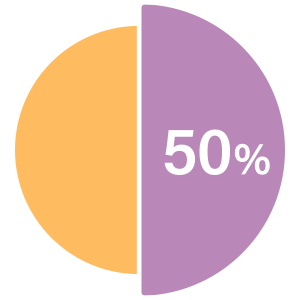
Up to half of all pregnant women who deliver prematurely have no known risk factors.1
What Information Is Provided by the PreTRM Test?
The PreTRM Test report is not a positive or negative (yes or no) result but an “individual risk prediction” of having your baby too early. The test result gives you and your doctor a percentage risk score that represents how high your pregnancy’s risk of delivering early.
- General risk of preterm birth for all singleton pregnancies: 7.3%
- Your individualized risk for preterm birth: X% based on the PreTRM test
The report also compares your personal risk for preterm birth to the average risk of all women pregnant with a single baby. For example, a pregnancy with a 22% individualized risk percentage would be three times as likely as average to deliver before 37 weeks.
With the risk information from the PreTRM Test, along with other vital information from your prenatal visits, you and your healthcare provider can personalize your pregnancy care to optimize your treatment plan and offer the best possible care for your baby.
Frequently Asked Questions
Talk with your health care provider and we can administer the test in office between 18 and 20 weeks.
The PreTRM Test Report is sent to your doctor will provide information on your individual risk for premature delivery.
Rather than a positive or negative (yes or no) result, the PreTRM Test provides an “individual risk prediction” of having your baby too early. The test result gives you and your doctor a percentage that represents how high your pregnancy’s risk of delivering early is, compared to the risk in the general population of women pregnant with single babies.
Most pregnant women are candidates for the PreTRM Test. PreTRM can be used to identify your risk of preterm delivery if you:
- Are 18 years old or older
- Are pregnant with a single baby (not twins, triplets, or other multiples)
- Are not currently showing signs of preterm labor
- Are not on progesterone therapy after the first trimester of your pregnancy
- The baby has no confirmed or expected genetic condition or disorder that is associated with shortened gestation
If you would like to find out if you qualify for the PreTRM Test, speak with your healthcare provider early in your pregnancy.
If your doctor ordered the test, your results will be sent to them in an average of 7 business days. They will communicate your results to you.
If you learn that you are at a higher risk of delivering early, your doctor will work with you to adjust your obstetrical care to plan for this possibility.
You should pay close attention to the changes in your body throughout your pregnancy and be alert to the signs and symptoms of premature labor.
The PreTRM test is currently only covered by Teachers Health Trust. For all other payers it is an out of pocket cost please discuss with your healthcare provider the cost.
- Iams, JD. Clinical Practice. Prevention of preterm parturition. N Engl J Med. 2014;370:254-61.