
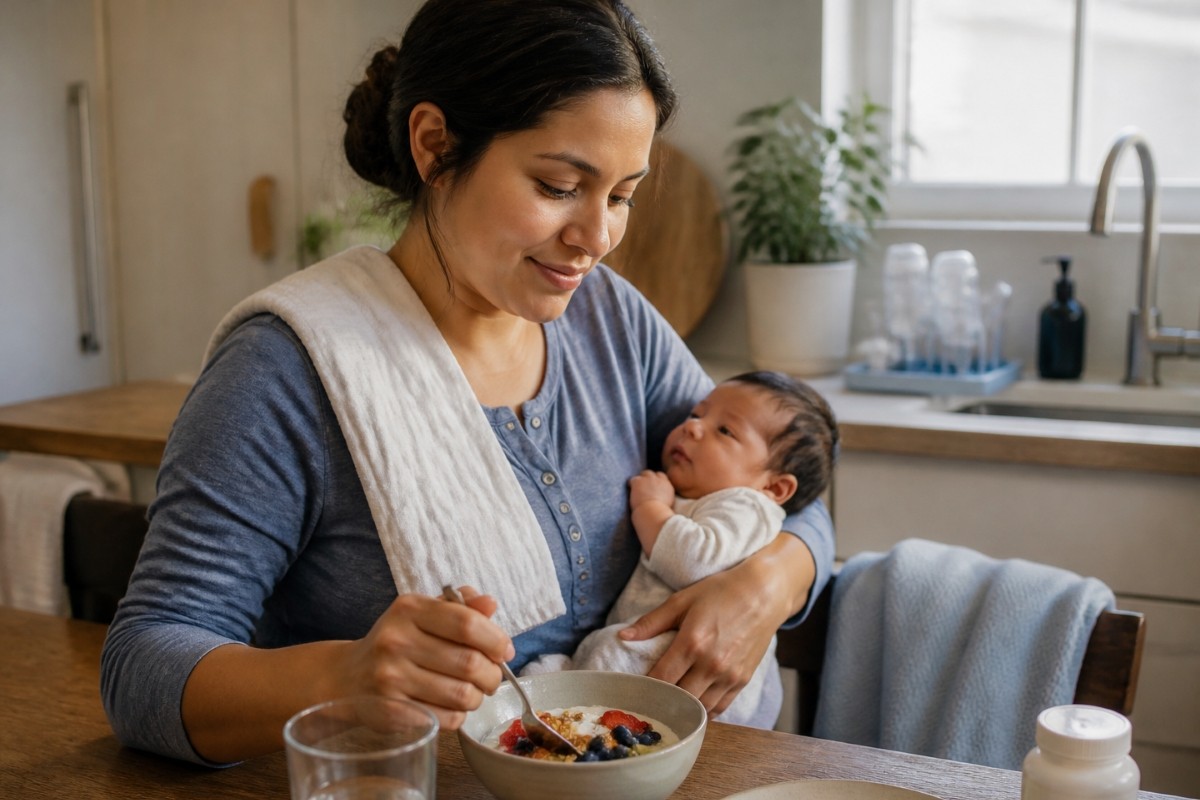
Breastfeeding is a period of higher nutritional demand on your body. Making milk takes energy, fluid, and a steady supply of nutrients, and the food you eat keeps that process going without draining your own reserves. The good news is that a breastfeeding diet in 2026 is not strict. For most women, it means regular, balanced eating with a few specific things to watch.
Best foods to eat while breastfeeding
The best breastfeeding diet looks a lot like healthy eating for any adult, with a bit more of everything. Build your plate around lean protein like chicken, eggs, beans, and fish, whole grains such as oats and brown rice, plenty of fruits and vegetables, and healthy fats from nuts, seeds, avocado, and olive oil.
Dairy or fortified alternatives matter because your body pulls calcium for milk whether or not you eat enough of it. Low-mercury fish such as salmon, sardines, and trout a couple of times a week gives you omega-3 fats that support your baby’s brain development. We covered the basics in an earlier post on breastfeeding and nutrition.
How many extra calories do you need while nursing?
Most women who are exclusively breastfeeding need a few hundred extra calories a day, generally in the range of 300 to 500. That is roughly one extra snack-sized meal, not a second plate at dinner. Your exact need depends on your activity level, your weight, and how much milk you are making.
Hunger is usually a reliable guide. If you are losing weight faster than about a pound a week, feeling dizzy or exhausted, or noticing your energy supply dropping, you may not be eating enough. Gradual weight loss is fine. Crash dieting is not, because very low calorie intake can reduce milk production.
What to drink while breastfeeding
Thirst is the signal to follow. Milk is mostly water, and many women feel very thirsty while nursing, so keep a water bottle wherever you usually feed the baby. Pale yellow urine is a good sign that you are hydrated enough. Drinking far beyond thirst does not increase milk supply. Water, milk, and unsweetened drinks are the best choices.
Is caffeine OK while breastfeeding?
Moderate amounts of caffeine are considered safe. A small amount passes into breast milk, but up to about two to three cups of coffee a day is unlikely to affect most babies. Newborns and preterm infants clear caffeine more slowly, so if your baby seems unusually jittery or wakeful, try cutting back for a few days.
Can you drink alcohol while breastfeeding?
Not drinking is the safest choice, but an occasional single drink is generally considered acceptable. Alcohol passes into breast milk at about the same level as your blood and leaves as your body clears it. Waiting about two hours per drink before nursing again is the standard guidance. Pumping and dumping does not speed this up; only time does.
Foods to avoid while breastfeeding
The actual list of foods to avoid is short:
- High-mercury fish such as shark, swordfish, king mackerel, tilefish, marlin, orange roughy, and bigeye tuna
- Large amounts of alcohol or caffeine, as covered above
- Herbal supplements or teas promoted for milk supply without checking with your provider first, since many are untested in nursing women
Spicy food, garlic, broccoli, and beans are safe. They may change the flavor of milk slightly, but they do not cause gas in your baby.
Do you need vitamins or supplements while breastfeeding?
Many providers recommend continuing your prenatal vitamin or switching to a postnatal one while you nurse, especially if your diet is limited. Vitamin D, iodine, and choline are the nutrients most likely to run short. If you eat a vegan or mostly plant-based diet, vitamin B12 is essential. Breastfed babies also typically need their own vitamin D drops, which your pediatrician will discuss.
What if a certain food seems to bother your baby?
True food reactions in breastfed babies are less common than many parents expect, but they do happen. Cow’s milk protein is the most frequent cause. Signs include blood or mucus in the stool, persistent eczema, or fussiness tied to feeds rather than general newborn crankiness.
If you suspect a food, talk with your provider or pediatrician before cutting it out. Removing one food group for two to three weeks and watching for improvement is the usual approach. Eliminating many foods at once rarely identifies the cause and can leave you short on nutrients.
Getting support for your breastfeeding diet in Las Vegas
If you have questions about your weight, your milk supply, a possible food reaction, or which supplements make sense for you, bring them to a postpartum visit or join our Let’s Get Lactating breastfeeding class. Schedule an appointment at MyOBGYN in Las Vegas. The providers at MyOBGYN care for women through every stage of pregnancy and the months after.