
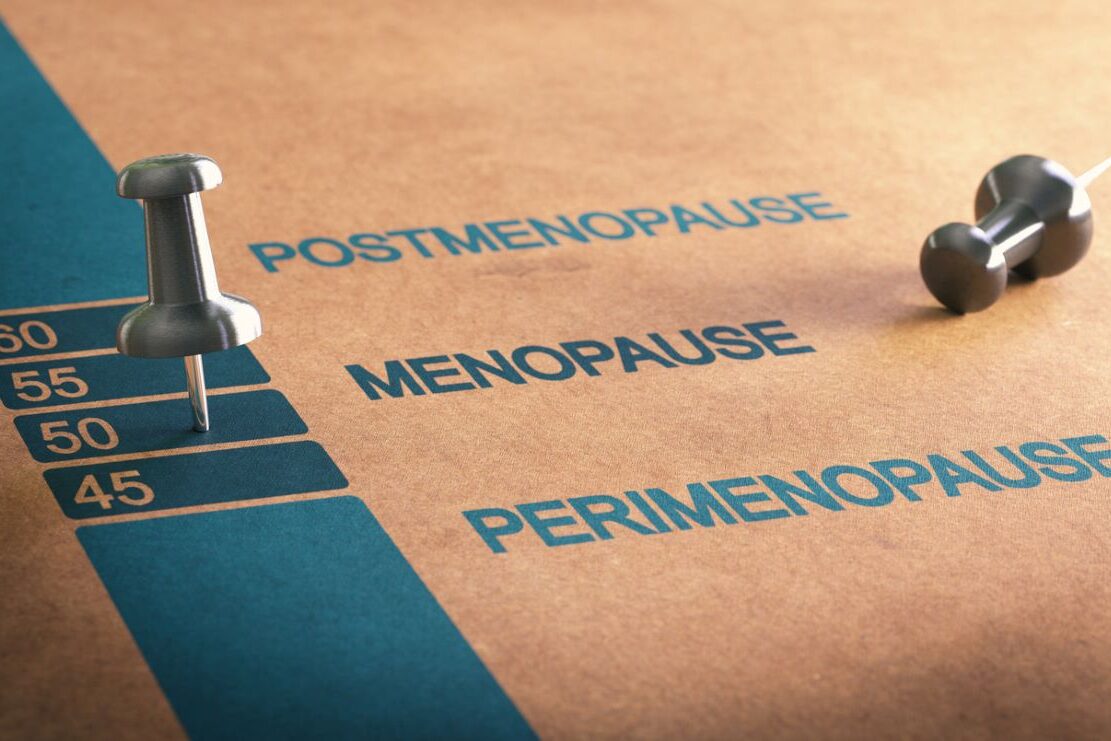
Menopause is a slow-moving process that unfolds over a period of months or years. Menopause officially occurs after a woman has undergone 12 consecutive months without a period, but unofficially, the symptoms of menopause can start years leading up to this moment. That means symptoms such as night sweats, hot flashes, or vaginal dryness may start to happen before menopause occurs. The average age of menopause is fifty-one years of age, so it’s not unusual to experience menopausal and perimenopausal symptoms for a few years prior.
The group of hormones that drive menopause are estrone, estradiol, and estriol. Collectively, they’re known as estrogen hormones. In menopause, estrogen levels begin to decline, and this results in many of the symptoms that we’re familiar with. But as women begin the journey of menopause, it is helpful to know what to expect and the steps you can take to help make the transition as smooth as possible.
Menopause can best be described in three stages:
- Perimenopause – The 3-8 years before women are officially in menopause. Symptoms of menopause may start to occur in this phase.
- Menopause – Once a woman has gone 12 months without a period, this is officially menopause. Symptoms of menopause will likely continue to occur during this time.
- Post menopause – The phase when menopausal symptoms decline and more symptom-stability is reached.
Perimenopause
According to the Cleveland Clinic, perimenopause may begin as early as your mid-30s or as late as your mid-50s. There is a wide amount of variation here, but much depends on your unique factors, such as medical history, genetics, and body biochemistry. Here are some other key facts about perimenopause
Symptoms of Perimenopause
During perimenopause, well-known symptoms like hot flashes, night sweats, and difficulty sleeping may start to occur. Other symptoms like night sweats, vaginal dryness, and hormone fluctuations may also happen. The symptoms of perimenopause can vary dramatically between each woman. It is a good idea to speak to your doctor about any symptoms you are experiencing, especially if your quality of life is being impacted. No matter how small you think a symptom may be, obtaining medical advice is still important.
Fertility at This Stage
Although fertility will decline during menopause, it is still possible to become pregnant. If you are considering starting a family, be mindful that the sooner you try, the better your chances of successfully conceiving.
How Long Does This Phase Last?
Although some women are in perimenopause for a short period of time, for some, it can last anywhere from four to eight years.
Menopause
After going one full year without a period, this is officially menopause. The ovaries have stopped producing almost all estrogen, and they no longer release eggs.
Symptoms of Menopause
During full menopause, many of the symptoms that were experienced in peri-menopause may still occur. However, it is hoped that by now, any symptoms interfering with your quality of life are being managed in consultation with your doctor. It is important to get help when the symptoms of menopause start to affect your overall wellness.
Managing Menopausal Symptoms
Managing symptoms may include one or more of the following:
- Lifestyle Changes – Diet, exercise, and stopping smoking are all changes that should be considered. They can also be used in conjunction with any of the options below.
- Hormone Replacement Therapy (HRT) – HRT can be used to help manage symptoms such as hot flashes and night sweats. HRT is available in pills, patches, creams, or injections.
- Bio-Identical Hormones – Bioidentical hormones are plant-based estrogens that are synthetic. Like traditional HRT, bioidentical hormones come in various forms, including pills, patches, and creams.
- Non-traditional Options – Although not used as a first-line treatment option, some women have found success in using non-traditional therapies such as acupuncture, herbal remedies, or yoga. These are techniques that are used to promote relaxation, good sleep, and stress management.
How Long Does This Phase Last?
After going 12 months without a period, menopause has occurred. From here onwards, the transition to the postmenopausal phase begins.
Post-menopause
During the postmenopausal phase, most of your menopause-related symptoms will lessen, and over time, they will eventually disappear. But some health-related issues that should be remembered during this time include:
- Heart health – Women are now at increased risk for conditions such as heart disease. For that reason, paying close attention to your overall health, especially as you start approaching menopause, is important.
- Bone health – With the decline in estrogen levels, bone mass and density tend to decrease. This leaves the bones a little more prone to fracture, so in the postmenopausal era, women are at higher risk for osteoporosis. For this reason, be sure to continue exercising regularly and consume a diet rich in Calcium and Vitamin D.
Remember, routine well-woman exams and check-ups should be maintained to help monitor your blood pressure and ensure that all appropriate screenings are carried out.
Unfortunately, many women going through perimenopause and menopause minimize their symptoms and do not seek medical advice. They might think that their symptoms are not a major issue or that nothing can be done. However, reaching out to your medical provider is important, especially when the symptoms affect your normal routines. Your doctor can provide several safe, effective, and helpful solutions that can lessen the impact of your menopausal symptoms, whatever stage you are in.
References
https://www.hopkinsmedicine.org/health/conditions-and-diseases/introduction-to-menopause
https://www.mayoclinic.org/diseases-conditions/perimenopause/symptoms-causes/syc-20354666
https://www.nia.nih.gov/health/menopause/what-menopause