
According to the American Cancer Society, every year, an estimated 13,000 women in the United States will be diagnosed with cervical cancer. Cervical cancer is a cancer of the cervix, which is located in the lower part of the uterus. The cervix acts as a connection between the uterus and the vagina.
Cervical cancer was once one of the most common causes of cancer deaths for women, but in recent years, with increased use of pap smears and greater awareness of the condition, the number has dropped significantly. This is the good news. But it is important to continue spreading the message about the role of pap smear testing, how it can potentially detect cancer, and how the test can save lives.
What Is a Pap Smear?
A Papanicolaou test, also called a pap smear or pap test, is a procedure that is used to test for cervical cancer in women. A pap smear can act as an early warning system by looking for potentially dangerous pre-cancerous cells in the cervix. If precancerous cells within the cervix are found, these can be removed before they develop into cancer.
The pap smear test is a relatively pain-free procedure that takes no more than 15 minutes and is usually completed by your doctor or OBGYN. The test is also available at most sexual health clinics.
Who Should Get a Pap Smear?
The American Society of Obstetricians and Gynecologists (ACOG) recommends that women should start having regular pap smears from the age of 21, regardless of when their first sexual activity started.
Women aged 30 to 65 can choose to have a pap test every three years or a pap test plus an HPV test (co-testing) every five years.
Your pap smear testing frequency should always be discussed with your doctor. Factors such as personal medical history, family history, and the results of past pap smear tests will be considered. This will help determine the best testing time frame for each individual.
What Happens During a Pap Smear?
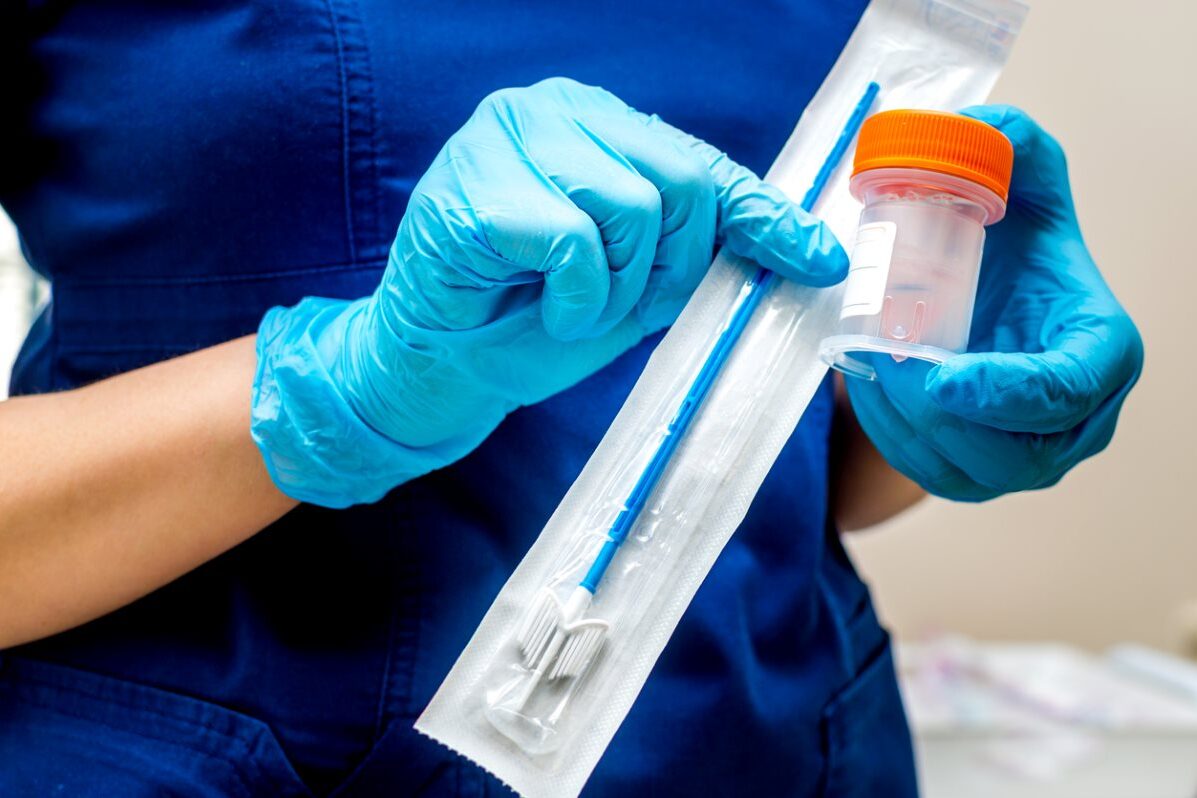
Pap smears are painless and usually carried out during a pelvic exam. The doctor will use a soft brush to take a swab sample from the cervix.
For women over the age of thirty, the pap smear may be combined with a test for human papillomavirus (HPV) — a common sexually transmitted infection that can cause cervical cancer.
The sample is then sent to the lab to look for abnormal cells under the microscope. Once the lab results are back, your doctor will contact you. Results may take a few days or weeks to return.
What Happens If the Results Are Abnormal?
The results of a pap test can fall under one of the following categories:
- Normal – A normal (or “negative”) result means no cell changes were found on your cervix. This is a good result. Future pap smear testing will still need to be carried out.
- Unclear/Inconclusive or ASC-US – It is common for test results to come back as unclear. This means that when the cells were looked at under the microscope, they appeared abnormal, but it is unclear why. It could be the result of HPV, or the change may be related to pregnancy, infection, or menopause. Therefore, depending on your medical history, this result may be explainable. Your doctor may ask you to repeat the test in a few weeks.
- Abnormal – An abnormal result means that cell changes were found on your cervix. This does not automatically mean that you have cervical cancer, but it does mean that the changes were likely caused by HPV -the virus that can lead to cancer. Minor (low-grade) or serious (high-grade) changes are further classified by how severe they appear.
The more severe the changes to the cells, the higher the risk of cancer. Therefore, these cells are often called “precancer,” and it is recommended to be removed before they become cancerous.
What Happens After an Abnormal Result?
Your doctor will have a discussion with you about what the results mean and the next steps to consider. This may include one of the following diagnostic tests or treatments.
- Colposcopy – your doctor will use a magnifying lens to visualize the cervix better. This involves a small tissue sample being taken from the cervix. The sample is then sent to the lab for further analysis.
- Loop Electrosurgical Excision Procedure (LEEP) or cold knife cone biopsy -These are minor surgical procedures that remove the cervical tissue with abnormal cells.
Any treatment option will always be discussed in full by your doctor. They will explain what the procedure is, the risks, benefits, and other potential alternatives. It is important to ask your doctor any questions you may have about the process, what to expect, and how best to plan for it.
Prognosis
An abnormal pap smear does not automatically mean cancer. It just means that a little more testing needs to be carried out to confirm exactly what’s going on inside the cervix. Once done, your doctor will speak to you about the findings, and you can both decide upon future actions. Sometimes, this means watchful waiting, and at other times, a minor surgical procedure may be required as a preventative measure.
Routine pap smear testing is important for good health and well-being. Stay up to date on your testing, and be sure to speak to your doctor if you have any questions or concerns about how pap smear testing works.
References
1) https://www.cancer.org/cancer/types/cervical-cancer/about/key-statistics.html
3) https://www.acog.org/womens-health/faqs/cervical-cancer-screening
5)https://www.hopkinsmedicine.org/health/wellness-and-prevention/my-pap-test-was-abnormal-now-what