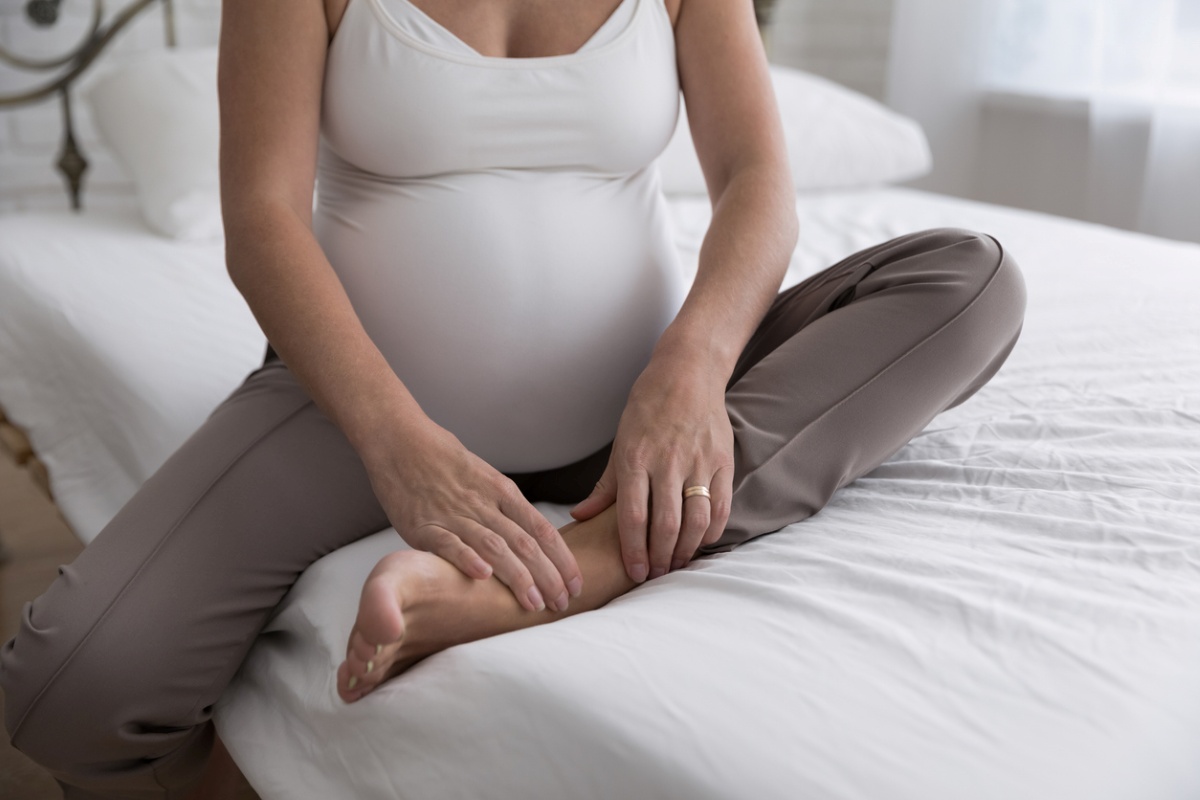
Swelling during pregnancy is one of the most common experiences for expectant mothers. Medically known as edema, it occurs when your body retains extra fluid to support your growing baby. Most of the time, mild swelling in the feet, ankles, and hands is completely normal. But in some cases, sudden or severe swelling can point to a more serious condition like preeclampsia, in which case you will need medical attention right away.
Why Pregnancy Causes Swelling
Your body goes through major changes to support your baby, and fluid retention is one of them. During pregnancy, your blood volume increases by nearly 50%. At the same time, your growing uterus puts pressure on the veins that carry blood back from your lower body. This combination makes it easier for fluid to pool in your legs, ankles, and feet.
Hormonal shifts also play a role. Higher levels of progesterone cause your blood vessels to relax and widen, which can slow blood circulation and lead to more fluid buildup in your tissues. Swelling tends to get worse as your pregnancy progresses, especially during the third trimester. Hot weather, standing for long periods, and eating salty foods can make swelling more noticeable.
Simple Ways to Find Relief
If you are dealing with everyday pregnancy swelling, there are several things you can do to feel more comfortable. Elevating your feet above your heart for 15 to 20 minutes a few times a day can help fluid drain away from your lower legs. Staying hydrated actually helps reduce swelling because your body is less likely to hold onto extra water when it is getting enough.
Gentle movement, like walking or swimming, encourages circulation and helps prevent fluid from sitting in one place. Wearing supportive compression socks or stockings can also make a difference, especially if you are on your feet for much of the day. Sleeping on your left side takes pressure off the large vein that returns blood from your lower body to your heart, which can reduce overnight swelling.
Try to limit foods that are high in sodium, since salt causes your body to retain water. Comfortable, supportive shoes are also a good idea, as your feet may swell enough to go up half a size or more during pregnancy.
When Swelling Could Signal Something Serious
While mild swelling is expected, certain types of swelling should not be ignored. Preeclampsia is a pregnancy complication that involves high blood pressure and can affect organs like your kidneys and liver. It typically develops after 20 weeks of pregnancy and can become dangerous for both you and your baby if it is not caught early.
Contact your provider right away if you notice any of the following:
- Sudden swelling in your face or hands, especially if it happens quickly
- Swelling that does not improve with rest or elevation
- A severe headache that will not go away, vision changes, or upper abdominal pain
Swelling in only one leg that is accompanied by redness, warmth, or pain could be a sign of a blood clot, known as deep vein thrombosis. This is a separate concern from preeclampsia and also requires prompt medical evaluation.
What Your OB Checks at Every Visit
Part of the reason regular prenatal appointments matter so much is that your provider monitors for warning signs you might not notice on your own. At each visit, your blood pressure is checked, and your urine is tested for protein. Both elevated blood pressure and protein in the urine are key indicators of preeclampsia.
Your provider will also ask about symptoms like headaches, vision changes, and swelling patterns. These check-ins are designed to catch problems early, when treatment is most effective. If your provider suspects preeclampsia, they may order blood work or additional monitoring to get a clearer picture of how you are doing.
Caring for Yourself and Your Baby
Some amount of puffiness and swelling is just part of the pregnancy journey. Staying active, drinking plenty of water, and resting with your feet up can go a long way toward keeping you comfortable. But trust your instincts. If something feels off or your swelling changes suddenly, do not wait until your next scheduled appointment to bring it up.
Your postpartum recovery will also go more smoothly when potential complications like preeclampsia are identified and managed during pregnancy. Keeping up with your well-woman visits ensures you and your baby stay on track throughout every stage.
If you have questions about swelling or any other pregnancy symptoms, schedule an appointment with the team at MyOBGYN by visiting myobgynvegas.com/book-appt or calling (702) 463-2981. Your providers are here to help you have the healthiest pregnancy possible.